

Healthcare and Education Expansion
Cincinnati is quickly becoming a Midwest hub for healthcare and education, with about $500 million going into major new facilities.
Cincinnati Children’s Liberty Campus
The largest project is the $365 million expansion of Cincinnati Children’s Liberty Campus. It includes:
- A new hospital wing with 72 beds and four operating rooms
- A new medical office building
- Renovations to existing facilities
- 250 new clinical jobs, including doctors, nurses, therapists, and mental health professionals
Cincinnati Children’s also partners with the University of Cincinnati in the Cincinnati Innovation District, a collaboration expected to bring more than 20,000 new jobs. Historically, large hospital expansions tend to drive steady home value growth in surrounding neighborhoods.
University of Cincinnati Growth
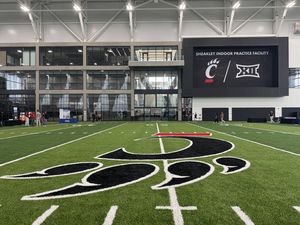
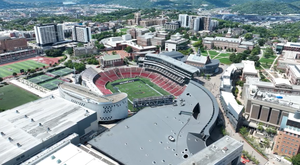
The University of Cincinnati recently completed a $134 million Indoor Practice Facility and Athletics Center, featuring:
- An 84,000-square-foot indoor field
- A 96,000-square-foot performance and recovery center
UC supports over 125,000 jobs and contributes $10.6 billion to the regional economy. Major campus investments signal long-term confidence and usually boost surrounding real estate demand.
Corporate and Technology Transformation
More than $1.1 billion is being invested in corporate expansions, bringing high-paying jobs and reshaping suburban and urban job centers.
Medpace – Madisonville
Medpace is building a $327 million campus expansion, including:
- A nine-story, 562,000-square-foot office tower
- A Clinical Pharmacology Unit
- A six-story parking garage
- 1,500 new biotech jobs
Biotech salaries are typically above average, and workers often seek quiet neighborhoods with strong schools, especially on Cincinnati’s east side near Madisonville.
DHL Express at CVG
DHL is investing $292 million in a new aircraft maintenance center at CVG:
- 305,000-square-foot hangar
- Space for Boeing 777 aircraft
- 300 new jobs
- Carbon-neutral design
Properties near CVG often see steady demand from airline and logistics workers.
Procter & Gamble – Mason
P&G is spending $500 million to expand its Mason Innovation Center:
- 500,000 square feet of new space
- 300,000 square feet of lab space
- Relocation of 800 workers from Winton Hill
When a company commits this heavily to one location, it signals long-term stability and boosts nearby housing demand.
Entertainment and Lifestyle Revolution
Downtown Cincinnati is getting more than $1 billion in entertainment and lifestyle upgrades.
Duke Energy Convention Center
A $240 million renovation will add:
- A rooftop terrace
- Updated meeting spaces
- A redesigned exterior
- A new LED Cincinnati sign
Bigger conventions mean more hotel stays, restaurant visits, and downtown foot traffic.
Convention Headquarters Hotel
A $536 million project will build:
- A 700-room hotel
- 62,000 square feet of meeting space
- A skybridge to the convention center
- 350–450 permanent hospitality jobs
Farmer Music Center
A $60 million gift from the Farmer Family Foundation will build a new 20,000-person outdoor venue at the former Coney Island site:
- 8,000 reserved seats
- Lawn space for 12,000
- An estimated $82 million annual economic impact
Alongside Riverbend, it will make Cincinnati a top tour stop.
Cincinnati Open Campus
A $260 million expansion will grow the tennis tournament from 56 to 96 players, making it one of the largest tennis events in the Midwest.


New Nightlife Downtown
Downtown also just gained a new nightlife anchor: Prim, from the creators of Ghost Baby.
Located at 70 W. Fifth Street near Fountain Square, Prim offers:
- Lounge-style “living room” entertainment
- Vinyl DJs and live performances
- Craft cocktails with gemstone-inspired names
Venues like this strengthen the “experience economy.” When people want walkable nightlife and dining, nearby neighborhoods often become more desirable and see rising home demand.
Festivals and Citywide Attractions
BLINK 2026
The immersive light and art festival BLINK returns October 8–11, 2026, featuring massive projection mapping and installations throughout downtown and nearby neighborhoods.
Large events like BLINK:
- Increase hotel and restaurant demand
- Bring national attention to the city
- Make nearby residential areas more attractive to buyers and investors
Transportation and Infrastructure Modernization
Nearly $5 billion is being invested in transportation upgrades.
CVG Elevate Project
The $575 million Elevate project at CVG runs through 2029 and includes:
- Expanded ticketing areas
- Improved baggage systems
- Updated concourses
CVG is already a major Amazon and DHL hub and is ranked the top mid-sized airport in North America for customer service.
Western Hills Viaduct
A $398 million project will build a new bridge south of the current viaduct while keeping the old one open during construction. It will include:
- Modern traffic design
- Bike lanes and sidewalks
- Better access to jobs and schools
Residential and Mixed-Use Development
New housing is rising to meet job growth.
Liberty Center Phase 2
A $76 million project will add:
- 264 high-end apartments
- Five-story, 234,203-square-foot building
- A 145-room hotel
Mixed-use areas like this reduce vacancy risk and stay active longer because homes, shops, and offices support each other.
The Game Changer: Brent Spence Bridge Corridor
The $3.6 billion Brent Spence Bridge Corridor is the largest infrastructure project in Cincinnati history.
- About 60% designed
- Construction expected late 2025 or early 2026
- Completion targeted for 2029
- Improves 8 miles of I-71 and I-75
- Adds a new cable-stayed bridge
- Creates millions of construction hours and thousands of jobs
Northbound traffic will use the new bridge; the current bridge will become safer and more locally focused.
This project doesn’t just fix traffic, it resets the regional economy by:
- Making shipping faster
- Lowering business costs
- Attracting new companies
- Increasing property values across many neighborhoods
What This Means for Real Estate
More than $7 billion in projects are already reshaping Cincinnati. These aren’t abstract plans; they’re active developments that will:
- Create tens of thousands of jobs
- Improve transportation
- Expand entertainment
- Increase housing demand
The people who benefit most are usually the ones who move early, before construction is finished and prices rise.
If you’re thinking about buying, selling, or investing, now is the window to act.
Email [email protected] to talk with Cincinnati real estate experts who can show you which neighborhoods stand to gain the most.
Cincinnati is changing fast. The question is: will you get in before everyone else does?